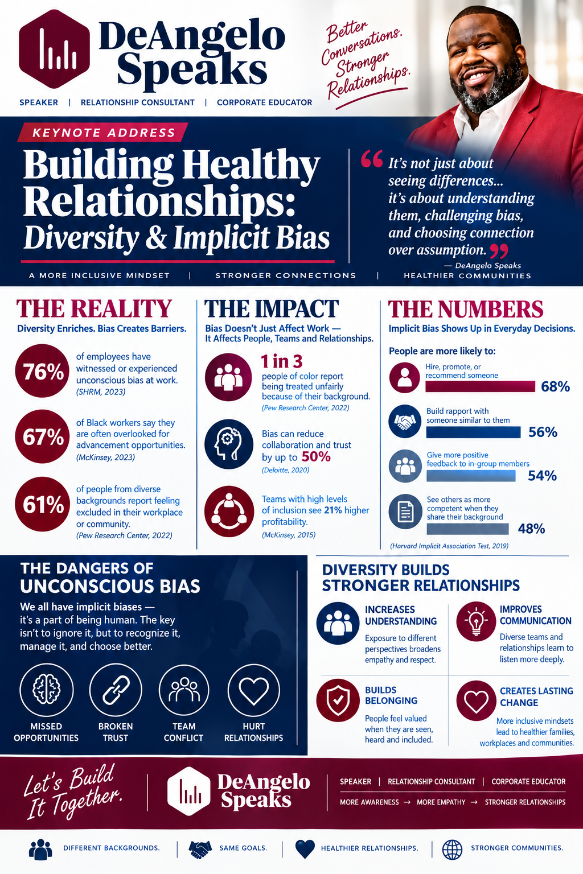
Diversity & Implicit Bias
The Building Healthy Relationships keynote address is designed as a multi-component experience that explores the essential elements that shape our relationships with ourselves, others, and the communities in which we live and work.
The Diversity & Implicit Bias component examines how diversity, privilege, stereotypes, and implicit biases can influence the way we perceive, communicate with, and build relationships with others. Participants will explore these dynamics through the lenses of race, socioeconomic class, sex, sexual orientation, religion, and culture, while gaining greater awareness of how personal experiences and social conditioning can shape perspectives and interactions.
This keynote component provides participants with an opportunity to move beyond awareness toward intentional understanding, meaningful dialogue, and more inclusive relationship-building. By examining the complexities of privilege and bias, participants are encouraged to recognize how these factors can impact trust, communication, belonging, and connection—and to develop greater self-awareness and empathy in their interactions with others.
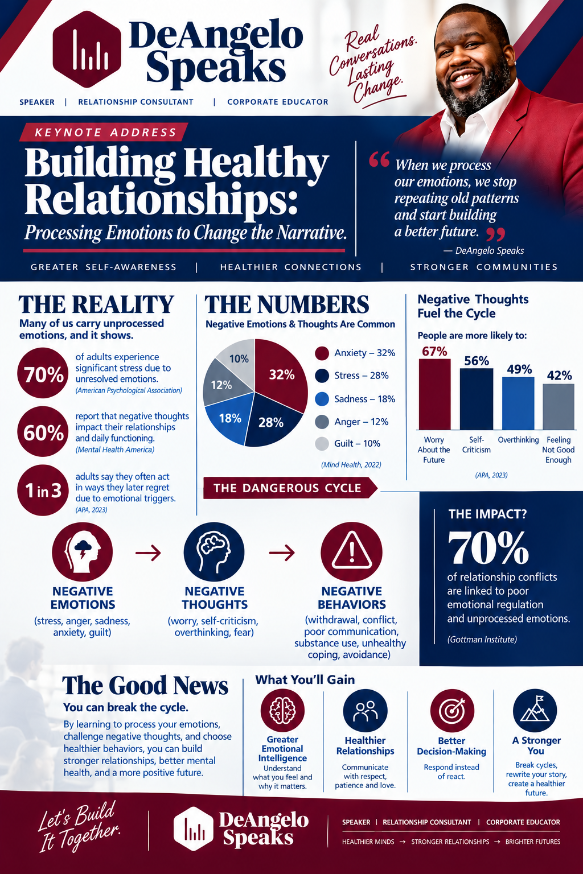
Processing Emotions to Change the Narrative
The Building Healthy Relationships keynote address is designed as a multi-component experience that examines the essential elements that influence how we relate to ourselves and others.
The Processing Emotions to Change the Narrative component is a CBT-informed, interactive keynote experience that guides participants through the process of understanding, identifying, and effectively navigating difficult emotions. Rather than allowing challenging emotions to dictate thoughts, behaviors, and relationships, participants are encouraged to examine the narratives they have developed and explore healthier ways of responding.
This keynote focuses on how intentional emotional processing can create opportunities for greater self-awareness, healthier decision-making, stronger relationships, and more fulfilling lives. Participants will explore practical strategies for managing difficult emotions, challenging unhelpful thought patterns, and moving away from the desire to “escape” when life becomes overwhelming.
Participants will leave informed, refreshed, and empowered with a greater understanding of their emotional experiences and a renewed perspective on what is possible when they learn to process emotions rather than be controlled by them.
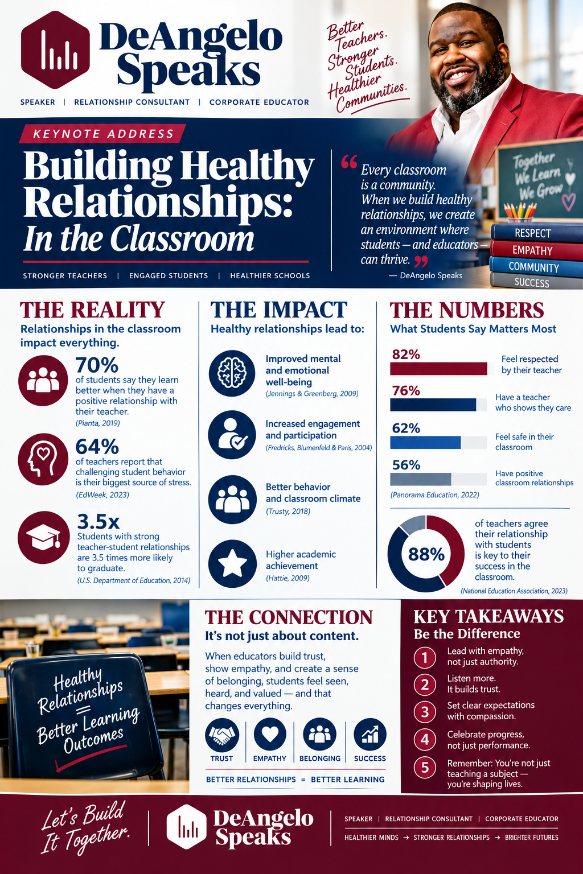
Building Healthy Relationships in the Classroom
The Building Healthy Relationships keynote address is designed as a multi-component experience that examines the essential elements that shape relationships across personal, professional, and educational environments.
The Building Healthy Relationships in the Classroom component emphasizes that relationships extend far beyond our personal lives. For educators, teachers, facilitators, and school professionals, the ability to establish meaningful relationships with students is an essential part of creating an environment where learning, trust, and growth can take place.
Every student brings a unique background, personality, perspective, and set of experiences into the classroom—and every classroom presents its own opportunities and challenges. This keynote explores how intentional communication, trust, consistency, empathy, and accountability can help educators navigate those differences while creating stronger connections with their students.
Participants will gain practical insight into building relationships that foster respect, engagement, belonging, and positive classroom culture. By approaching each student with intentionality and recognizing that relationship-building is an ongoing process, educators can create classrooms where students feel seen, supported, and empowered to succeed.